
From Trance Tracks to Motion Soundtracks
Long ago I spent a lot of time building melodies and arranging music. I was fascinated by sounds and the endless ways to arrange them, each one leading to a different result and a different feeling. When I made something worth keeping, I shared it and uploaded it wherever I could. If not, it went into an archive and nobody ever heard it. Those tracks are where my sense of timing comes from, before I was timing anything to a moving image.
If you design, you already know what a grid does. Music has one too, and in some genres it is strict. In trance, for example, everything runs in 4/4, phrases come in blocks of eight bars, and new sounds enter on those boundaries, never halfway through.
The arrangement works like hierarchy on a page. The intro sets up the grid. The build adds one layer at a time, so the ear always knows where to go next. Then the breakdown strips almost everything away. That breakdown is whitespace. It’s the part beginners cut because nothing seems to happen, and it’s exactly the part that makes the drop land.
It started with a tracker
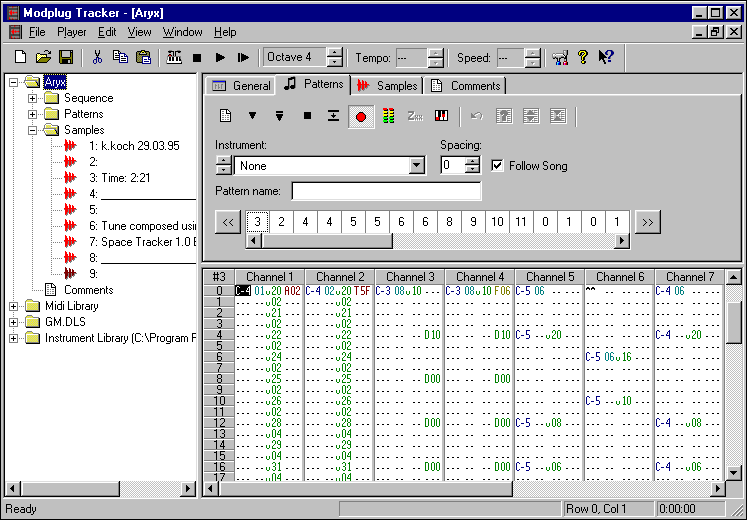
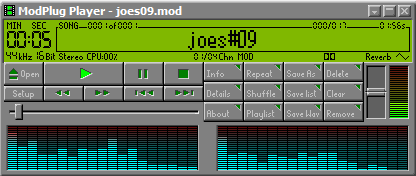
I first got interested in making music when I bought a CD full of music creation apps. On it I came across ModPlug Tracker, a program where you built songs out of WAV samples by typing notes and commands into a scrolling sheet, and it would play them back. Watching the demo songs play just blew my mind.
Trackers go back to 1987, when Karsten Obarski released Ultimate Soundtracker on the Amiga, one of the first music programs built around recorded samples instead of synthesized tones. Each channel is a column, each row is a step in time, and every cell holds a note, an instrument and an effect, like a slide or a volume change. The songs, saved as MOD files, were tiny and cheap to play, which made them the soundtrack of the demoscene and of many games of that era. ModPlug Tracker brought the idea to Windows in 1997, and it lives on today as the open-source OpenMPT.
I spent hundreds of hours in that app. Every day I couldn’t wait to get home from school and sit down to make music. As I got better and needed more features, I found FruityLoops, which back then was a simple app for building loops. It soon grew into a complete DAW, was renamed FL Studio in 2003, and is now used by famous producers. Anyway to be precise, apart from experiments, I made 51 songs with ModPlug Tracker, none of which I published, and 143 with FruityLoops and FL Studio. I still have every one of them on my hard drive. Many were never released on the internet, but some were, and you can listen to them below.
The ones I did publish mostly went up on SoundClick under the artist name saber. I also uploaded to several other sites, but most of them no longer exist. The songs were mostly melodic trance, with a few detours into breakbeat. EDM, melodic and uplifting trance, breakbeat, anything energetic: those are the genres I always came back to. I built them in ModPlug Tracker, Reason and FL Studio, then mixed and mastered them lightly in software like Cubase, Nuendo or Cakewalk, with a growing pile of VST instruments filling in the rest. A few of them climbed the SoundClick charts. Piano’s Tears, for one, reached number 5 on the breakbeat chart, which felt enormous at the time. A smaller set, Contact, Phobia and Stuntmen, lives on SoundCloud.
Now the music starts with the picture
These days I’m completely focused on design and rarely produce music, so the order is reversed. From time to time I make motion graphics or short motion pieces, and then create music to fit it. Some of theses music I publish to my artist page on Spotify, usually not long after the motion piece they were made for.
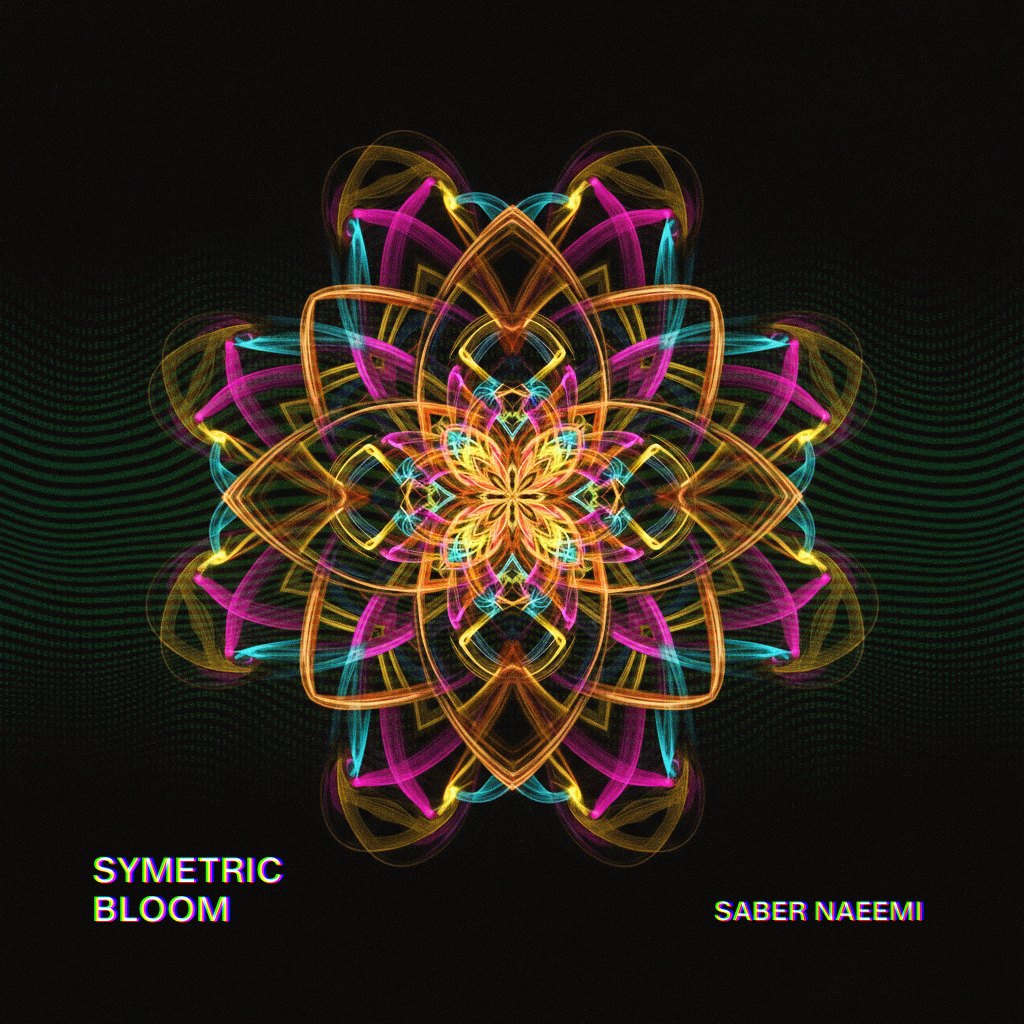
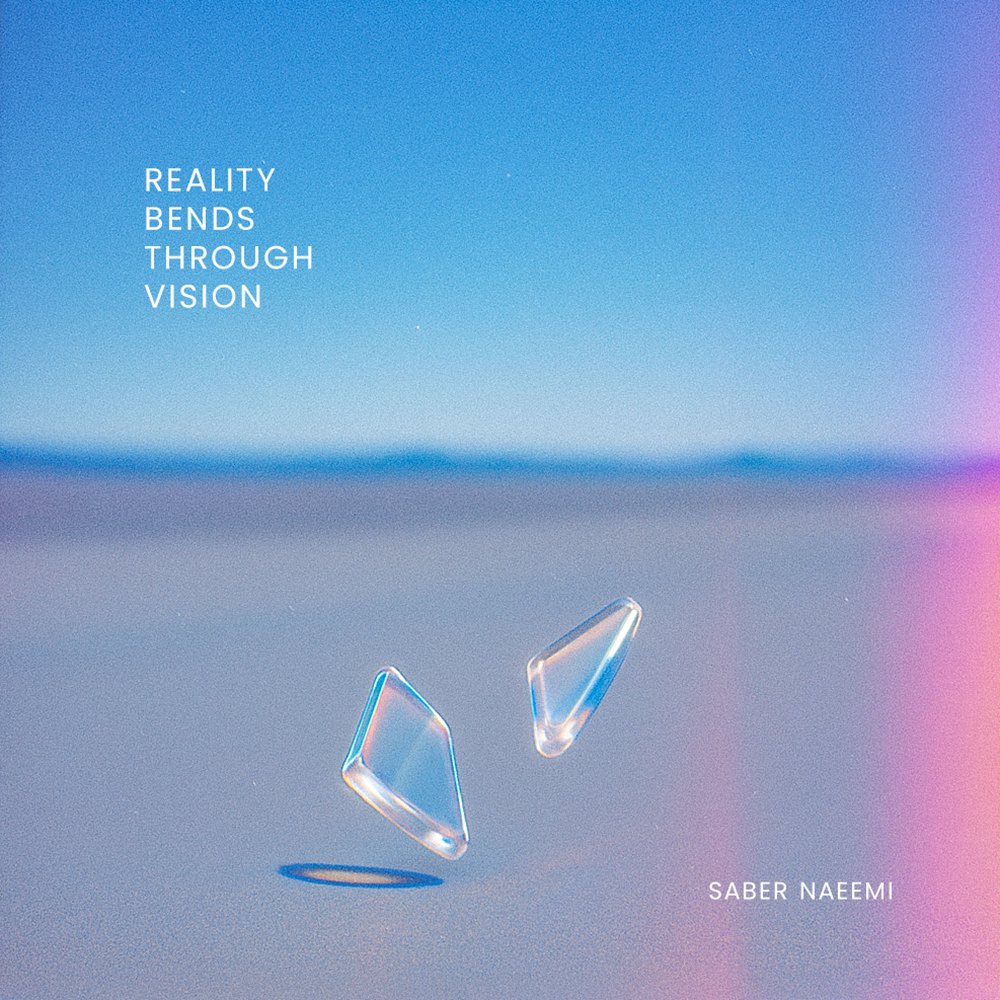
Reality Bends Through Vision is one for example. I made it for an experimental motion piece built around see-through glass, where a clear glass form drifts across heavy black type and bends it. Symetric Bloom was made for the film of Florence Buildings, my set of line icons of Florence’s landmarks on the Noun Project.
As for how I make them now, I use what I did learn about music and audio over those years to steer AI music tools toward a first draft of what I have in mind. What happens after that is the part I enjoy: picking the take worth keeping, cutting it to the edit, moving the accents so they land on the cuts, mastering it, and then extending it into a track that holds up without the picture.
So we can say it’s closer to art direction than composing. I’m not playing every part anymore, but I’m still the one deciding what stays, what goes, and where the ear should land, the same calls I make every day about where the eye should land. The experience from those trance years is the reason I can hear when a phrase runs two beats too long.
Releasing a song is a design project too
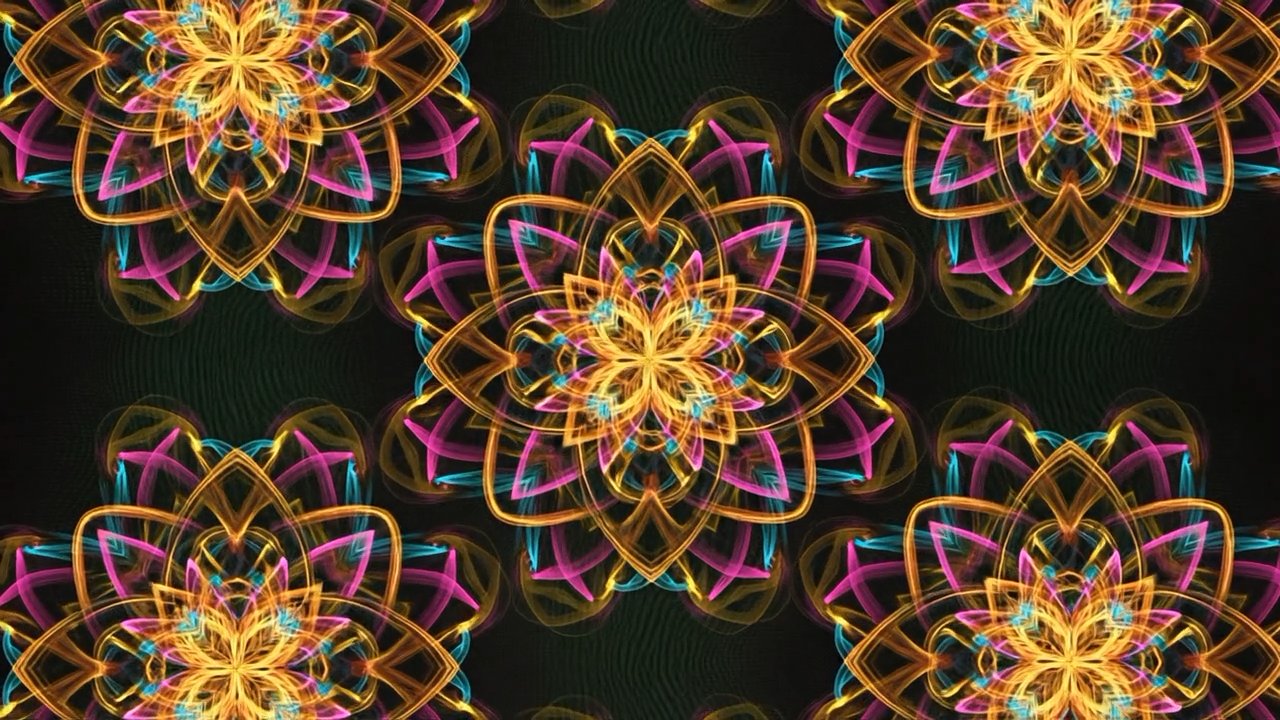
Every release on Spotify needs a square cover image, and you can add an optional Canvas, a short looping video that plays behind the song in the app. This is where design comes back in. The Symetric Bloom cover is built from a kaleidoscope animation: gold, magenta and cyan lines folding into a flower that mirrors itself in every direction, which is exactly what the title says.
Reality Bends Through Vision got a quieter image, in line with the see-through glass of the original motion piece: two glass shards hanging above a pale salt flat, with a streak of pink light at the edge. Same glass as the motion design, different world.
Comments are closed.