

AI Is Not Killing Creativity. Designers Have Had This Fight Since the 1800s
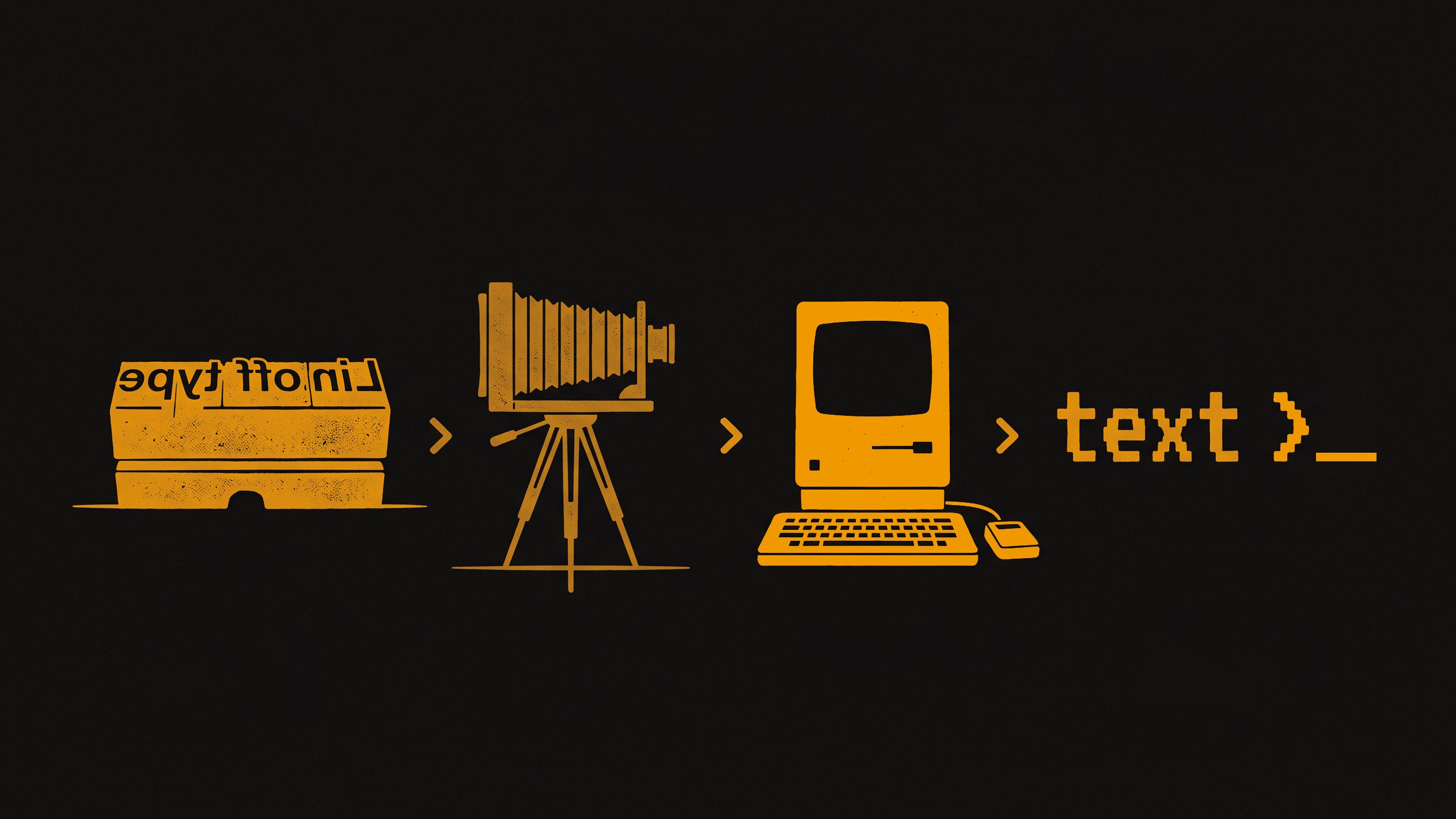
Okay, it is time I talk about this, because I see so many people arguing about it.
It’s in the comments under every illustration, in designer group chats, in the middle of client calls. One side says AI is destroying creativity and the people who care about it. The other side says it’s the future and everyone should relax. Both sides are loud, and a lot of what gets said boils down to somebody telling somebody else they’re not a real designer, or not a real artist.
The internet does not need another angry post. But I think there is a calmer version of this conversation, and it starts with something most of the arguments skip:
We have been here before. More than once!
Here is my position in two sentences: AI is a step forward, not backward, and designers will have to adapt to it, the same way every generation of designers has adapted to the tool that scared the one before. That does not mean nobody gets hurt along the way, and I’ll get to that, because it matters.
Why I’m not a neutral observer
Some people have started telling me I’m no longer just a designer, that I’m a creative technologist. I never went looking for the title, but I get why it fits. Because what I enjoy most is the place where technology and design meet. I like using one to make the other more useful and taking a real problem that makes people’s lives harder and using whatever tools exist to shrink it, so that life gets a little easier and a little more beautiful.
So when a new technology shows up, my first instinct is not to ask whether it’s allowed. It’s to ask what problem it could remove. That’s the bias I’m bringing, and you should know about it before you read the rest. But I’d rather argue from history than from excitement, because history has some very clear things to say.
The 1800s: machines were going to take the soul out of everything
In Britain, in the second half of the 1800s, the Arts and Crafts movement was a reaction to industrial production. John Ruskin argued that separating the act of designing from the act of making was socially and aesthetically damaging. William Morris carried that thinking into practice, and in 1891 he founded the Kelmscott Press to bring handcraft back into book production.
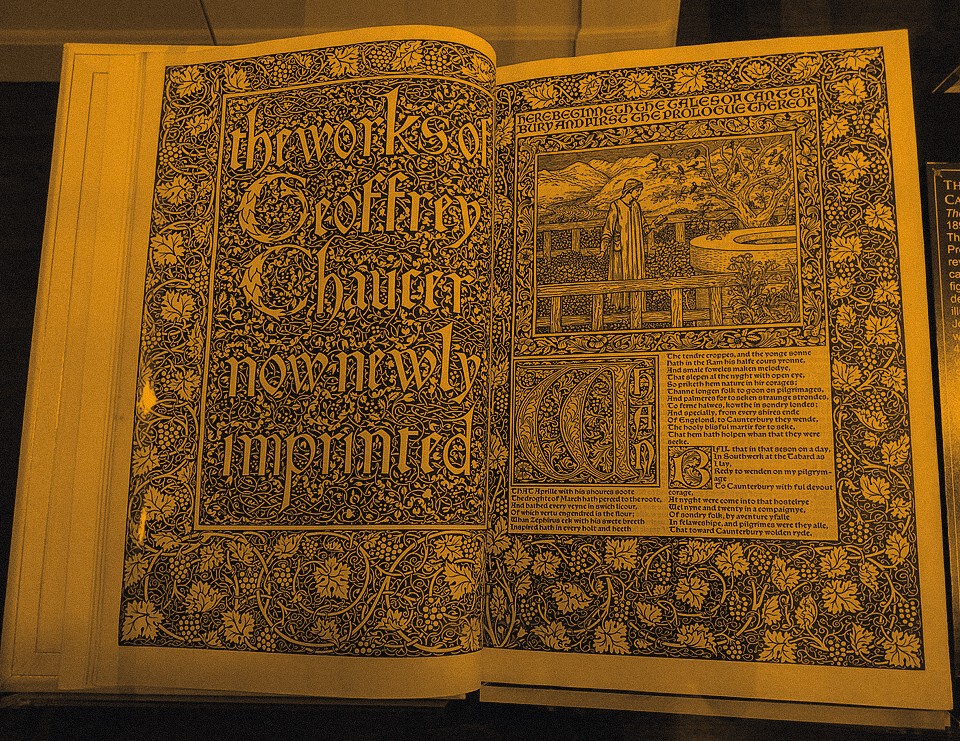
These were not foolish people. Factory conditions were harsh, and a lot of what they were angry about was real. It’s also worth noticing what happened next. According to the V&A, Arts and Crafts designers went on to build relationships with manufacturers and sell through shops like Morris & Co., Heal’s and Liberty. Handcraft survived. Industry survived. Nobody today is confused about the difference between a hand-bound book and a paperback, and both of them exist.
Photography was going to be the end of painting
For much of the 1800s, photography was not widely accepted as an art form. In an 1855 issue of The Crayon, one writer argued that photography lacked the personal expression and creative genius of a human artist and could never be considered superior to engraving. In contrast, the painter Paul Delaroche is often said to have declared that painting was dead, after seeing his first daguerreotype.
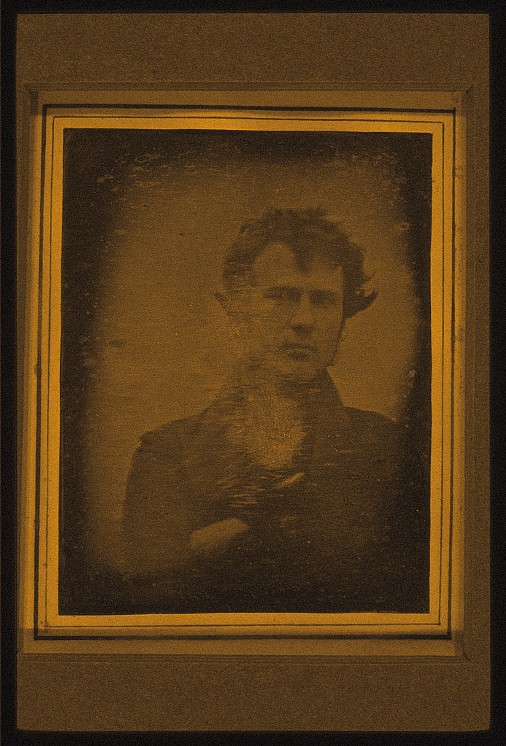
It went differently than the panic suggested. The V&A held the first museum exhibition of photography in 1858. Hans Rooseboom, a photography historian, went looking for evidence that photography wrecked Dutch portrait painters and found very little of it, along with painters reporting a revival around the same time. And Cornell’s exhibit on early photography notes that once an accurate likeness became the camera’s job, painters started exploring mood, color and light.
That isn’t a tidy story, to be fair. The same exhibit says that for many portrait painters, photography meant fewer commissions. Both things were true at once, which is how it usually goes.
The Linotype was going to replace the typesetter
This one is closest to my own world. Before the 1880s, compositors set text by hand, picking metal letters one at a time. On July 3, 1886, the New York Tribune used Ottmar Mergenthaler’s Linotype for the first time, and its publisher, Whitelaw Reid, had the machines installed in opposition to the typographical union. One operator at a keyboard could do the work of three to six compositors.
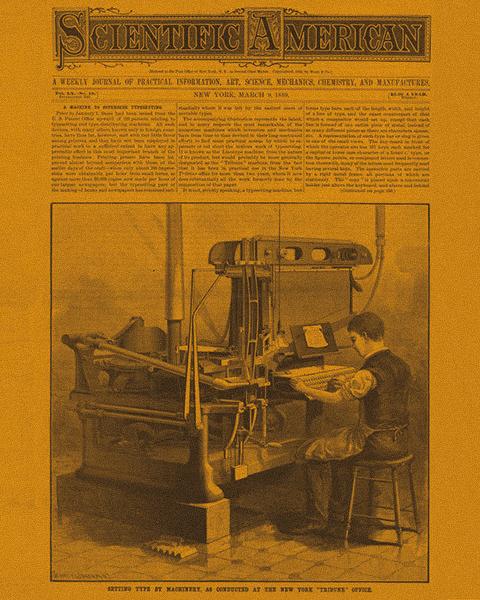
I want to be honest about this one, because it’s where the fear was most accurate. The typesetters were not imagining it. The job changed shape and fewer people did it. Typography survived, and I’m very glad it did! But that’s a comfort to the craft more than it was to the individual workers of 1886.
The Mac was going to ruin graphic design
Apple’s LaserWriter arrived in January 1985 and Aldus PageMaker in July of that year, and together they kicked off desktop publishing. The designer April Greiman has recalled that some famous men on the AIGA national board were saying “This is the end of everything,” and that they’d stick with their pencils. She said it was part of why she resigned from the board. She, meanwhile, took delivery of her first Macintosh in 1984, and went on to receive the AIGA Medal in 1998.
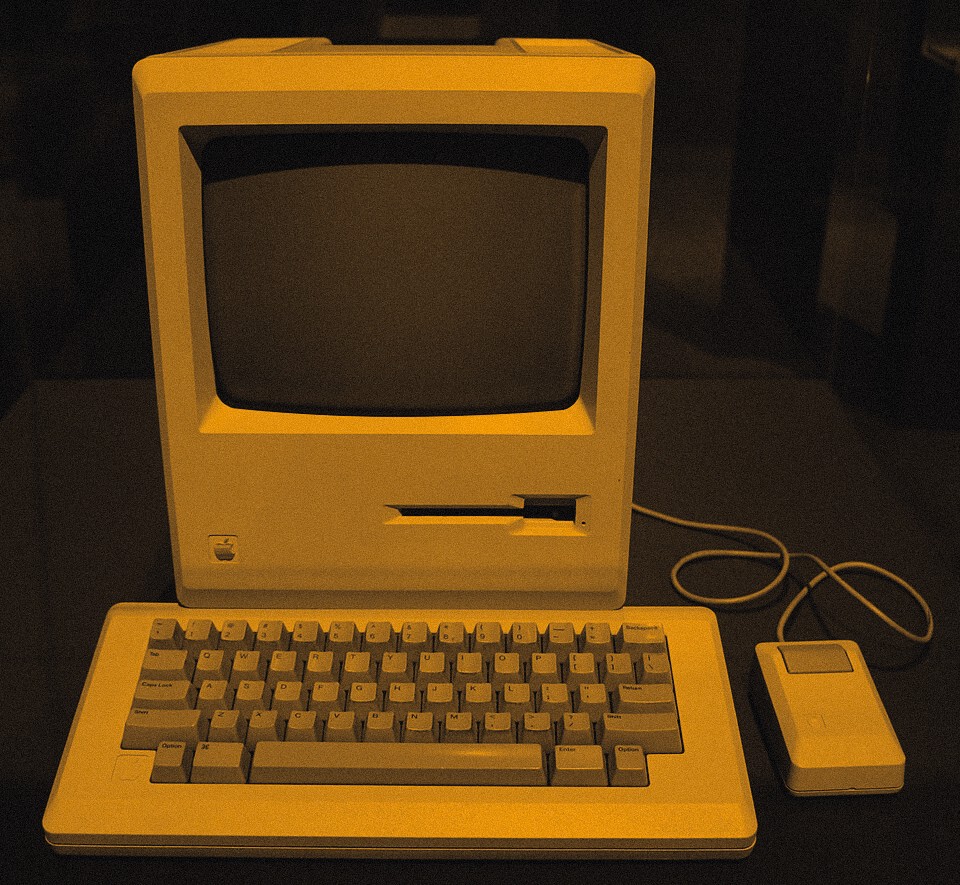
And the skeptics weren’t entirely wrong. Suddenly anyone could set type and lay out a page, and a lot of early desktop publishing was poorly made. What changed was not that taste stopped mattering. Taste became easier to see, because everyone now had the same buttons and only some people knew what to do with them.
The same five beats, every time
Put these stories next to each other and the pattern is hard to miss.
- A new tool makes something easier, faster or cheaper.
Machines, cameras, keyboards, laser printers, and now prompts. - People who spent years mastering the old way fear for their jobs and their identity.
That fear is human, and it is not stupid. - The objection becomes that the new method has no soul.
Every one of these eras had its own version of that sentence. - A new generation learns the tool anyway.
They don’t ask permission, they just start making things. - The field changes, and things appear that nobody predicted.
Some jobs go, some jobs are born, and the word “designer” quietly stretches to cover more.
Where the worried side is right
I don’t want to wave away the people who are scared, because some of what they’re saying isn’t nostalgia.
The latest survey from the UK’s Association of Illustrators (549 respondents, reported in late October) found that 46% know a client chose generative AI over them, up from 32% a year earlier. It’s a trade body’s poll, and the association itself acknowledges the wider economy plays a part. But it isn’t nothing.
There’s also a question the earlier tools never raised. None of the machines in this story were built out of the work of the people they were disrupting. Many image generators were trained on images scraped from the internet, and a group of illustrators has been suing over exactly that since 2023, in a case that is still working its way through a California court. In that same Association of Illustrators survey, 98% said AI companies should ask permission before training on protected work.
So here is where I land. “It has happened before” is a good answer to “AI has no soul.” It is not an answer to “you used my work without asking.” I don’t think those two positions cancel each other out. I want better rules on consent and payment, and I want to learn the tool. You can hold both.
Every design is layers
Think of any design file as layers. The bottom layers are production: setting type, retouching, resizing, tracing. The top layers are decisions. What to say, to whom, what to leave out, and when it’s finished.
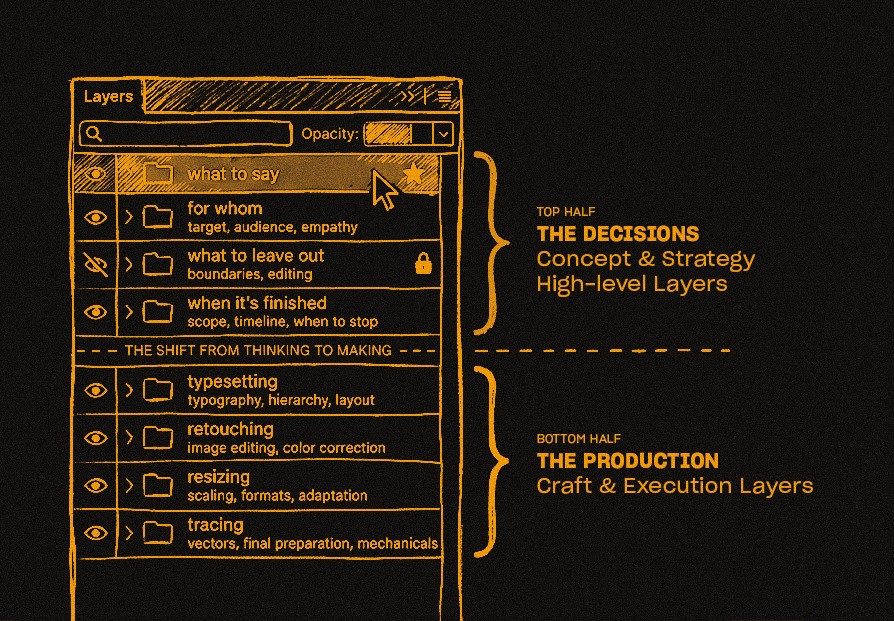
Each of these revolutions pulled work out of the bottom layers. The hand typesetter, the painstaking portrait likeness. And each time, the top layers became more visible rather than less, because that’s where the difference between a good result and a bad one lived.
This time the tool reaches higher up the stack than before, into image-making itself, and I think that’s why it feels so personal. But a generated image is still just a layer. Somebody has to decide what it’s for, whether it’s right, whether it’s true, and whether it should exist at all. That layer isn’t automated. If anything there will be more of it, because more things will get made.
Paula Scher described a good small example of this in a talk at the Hatch conference in Berlin this September. One of her clients asked for a cleaner, Midjourney version of her team’s hand-made marks, but what came back looked generic. So the team went back to their own rough marks and wrote a prompt around that style, which got them about 1,500 illustrations.
In the talk she said she knows people get defensive about the era of technology they came from. Her point was that the basic principles of graphic design, mostly scale and color, stay with you for a whole career and move with you from one tool to the next. And she closed her talk with work made by hand. She is a renowned designer who has worked through record covers and several generations of technology, so this is not a cheerleader’s view of AI. It is someone who knew what her team had to bring to the tool to get the expected results.
What to do with the time it gives back
If AI keeps taking the bottom layers, the real question is what you do with the time. A lot of what it takes off my plate is the repetitive technical work that used to eat my time and energy, and sometimes it does it without me needing the technical knowledge I would have needed before. That means the masking, the cleanup, the file organizing and the exports, which is the work most of us never got into design to do. I don’t want the fastest route to an idea. I want the fastest route through everything around it. That is real creative freedom, and it means faster delivery.
But there is a trap, and a lot of people are walking into it. Faster does not have to mean more. Researchers at UC Berkeley followed about 200 employees at a tech company for eight months and found that AI did not shrink the workload. People worked at a faster pace, took on a broader range of tasks, and let work spill into more hours of the day, often without anyone asking them to. It is a small, in-progress study at one company, so I would not call it a law, but it matches what I see around me.
Researchers at BCG have put a name on one of the consequences: AI brain fry. In a study of 1,488 full-time US workers published in Harvard Business Review, 14% reported experiencing it. It describes the mental exhaustion that comes from working with too many AI tools, juggling more tasks, and constantly processing the output they produce. In other words, the technology designed to make our lives easier can leave our brains with even more to process.
I get it. It is exciting. When you can make in an afternoon what used to take a week, saying yes to three more projects feels natural. I would still rather spend the time I get back away from the screen: a trip, a book, a long dinner with friends and family. The point of removing the problem was to make life a bit easier and a bit more beautiful, and that has to include mine.
What I’d say to a designer who is worried
I’d say you’re not wrong to feel unsettled, and you’re in very good company. The designers who said the Mac was the end of everything were serious, accomplished people. They were reacting the way people always react.
I can’t promise that every job survives. The typesetters of 1886 would tell you that history makes no such promise. What it does show, again and again, is that the people who learn the tool early get a say in what it’s for, and the people who stay away from it have that decision made for them.
What keeps you in the game is the slow stuff: your taste, your point of view, the stories you have to tell. Those take years to build, and no tool hands them to you.
So try it. Push it until it breaks. Find out where it’s bad, because that’s exactly where you’re still needed. Then push for the rules you think it should follow.
Maybe the biggest threat to creativity has never been the new tool, but our unwillingness to learn how to use it.
Resources
Sources, in the order they appear
- V&A, Arts and Crafts: an introduction
- UNSW Library, Works on the Arts and Crafts movement (Kelmscott Press, 1891)
- JSTOR Daily, When Photography Was Not Art
- JSTOR Daily, Did Photography Really Kill Portrait Painting?
- Cornell University Library, Dawn’s Early Light: Photography As Art, Painting As Impression
- History of Information, The New York Tribune publishes the first application of the Linotype (July 3, 1886)
- CultureNOW, New York Tribune and the first Linotype
- Computer History Museum, Desktop Publishing: Aldus PageMaker
- AIGA Eye on Design, April Greiman Is Still Ahead of the Curve (March 22, 2019)
- Laurence King, LA Woman (April Greiman)
- AIGA, 1998 AIGA Medalist: April Greiman
- HuffPost, John Fox, 30 Years Ago: Aldus PageMaker
- Resultsense, Association of Illustrators generative AI survey 2026 (reported November 4, 2026)
- Artnet, Artists Land a Win in Class Action Lawsuit Against A.I. Companies
- Hatch Conference, Paula Scher, inside Pentagram’s Work: Identity, Typography and Where AI Fits (YouTube, November 2, 2026)
- Harvard Business Review, Aruna Ranganathan and Xingqi Maggie Ye, AI Doesn’t Reduce Work, It Intensifies It (February 2026)
- UC Berkeley Haas, AI promised to free up workers’ time. UC Berkeley Haas researchers found the opposite (February 18, 2026)
- Harvard Business Review, Julie Bedard et al., When Using AI Leads to ‘Brain Fry’ (March 5, 2026)
Image credits (numbers match the captions)
- The Kelmscott Chaucer, William Morris, Kelmscott Press, 1896. Photo via Wikimedia Commons. Recolored.
- Robert Cornelius, self-portrait daguerreotype, 1839. Library of Congress, Prints and Photographs Division, Daguerreotype collection. Recolored.
- Scientific American, March 9, 1889, front page. Shown on the Linda Hall Library page on Ottmar Mergenthaler. Recolored.
- Macintosh 128K, 1984. Photo by Sailko, CC BY 3.0, via Wikimedia Commons. Cropped and recolored.
Comments are closed.