

Dante’s Inferno, Cantos 29 to 31, as a square book the reader turns in circles, with a picture made from the verse on every page.
- Text
- Inferno 29 to 31
- School
- IED Firenze
- Advisor
- Prof. Giovanni Iozzi
- Year
- 2022
- Format
- 28 × 28 cm
- Status
- Prototype
- Deliverables
- 44-page Book Layout Design · Illustrations · Augmented Reality Experience
- Tools
- Adobe InDesign · Adobe Photoshop · Adobe Aero · Cinema 4D · Midjourney 1.0 · DALL·E 2
The cantos
Three cantos near the bottom of Hell.
The Divine Comedy follows Dante down through Hell, up the mountain of Purgatory and into Paradise, in a hundred cantos of three-line verse. Cantos 29 to 31 of the Inferno sit near the very bottom. In the last ditch of the eighth circle the falsifiers lie in heaps, sick with every kind of disease: alchemists, impersonators, counterfeiters, liars. Then fog, a horn blast, and the giants standing around the well that leads down to the last circle.
The brief was to give these three cantos a book of their own: the layout, the type and the cover, pictures for the text, and a way to step off the page into it.
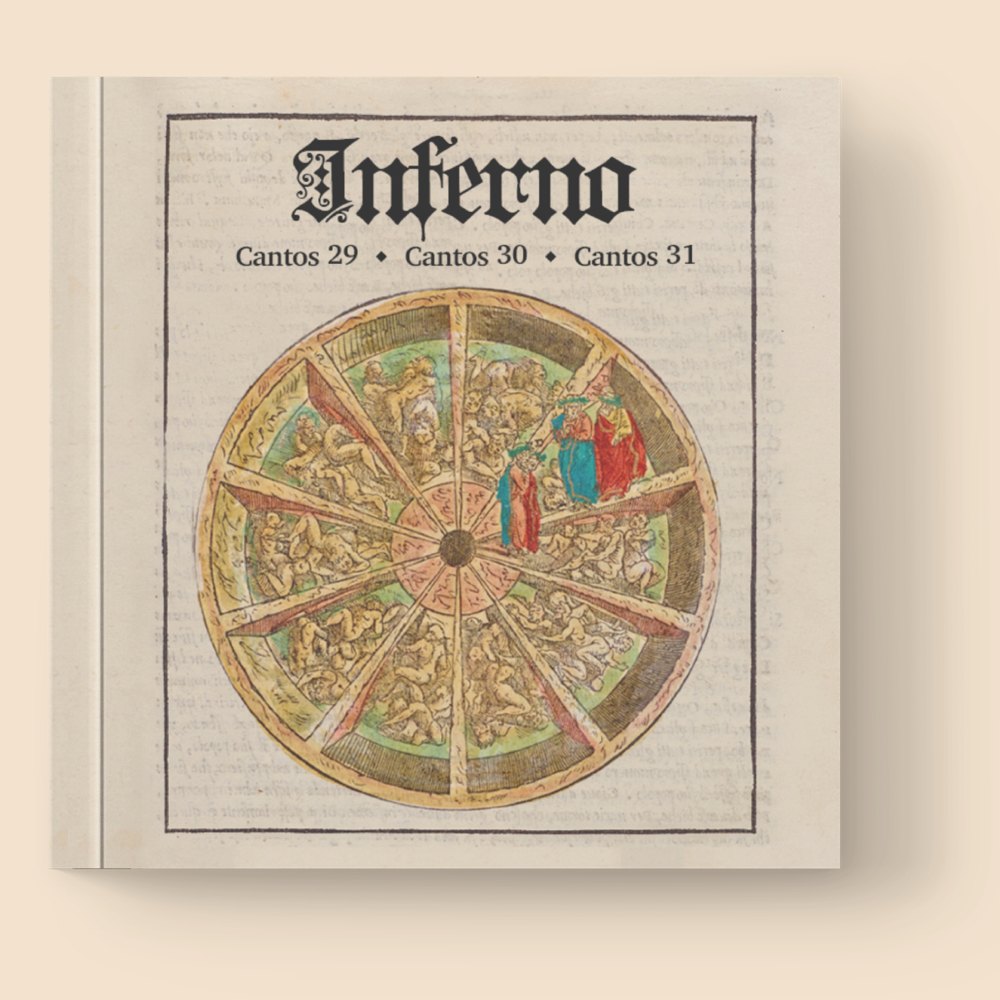
The answer is a square book of 44 pages, 28 centimeters a side. Its cover sets the title in blackletter over a wheel of figures taken from an early illustrated page of Canto 29.
The page
One page, one full turn.
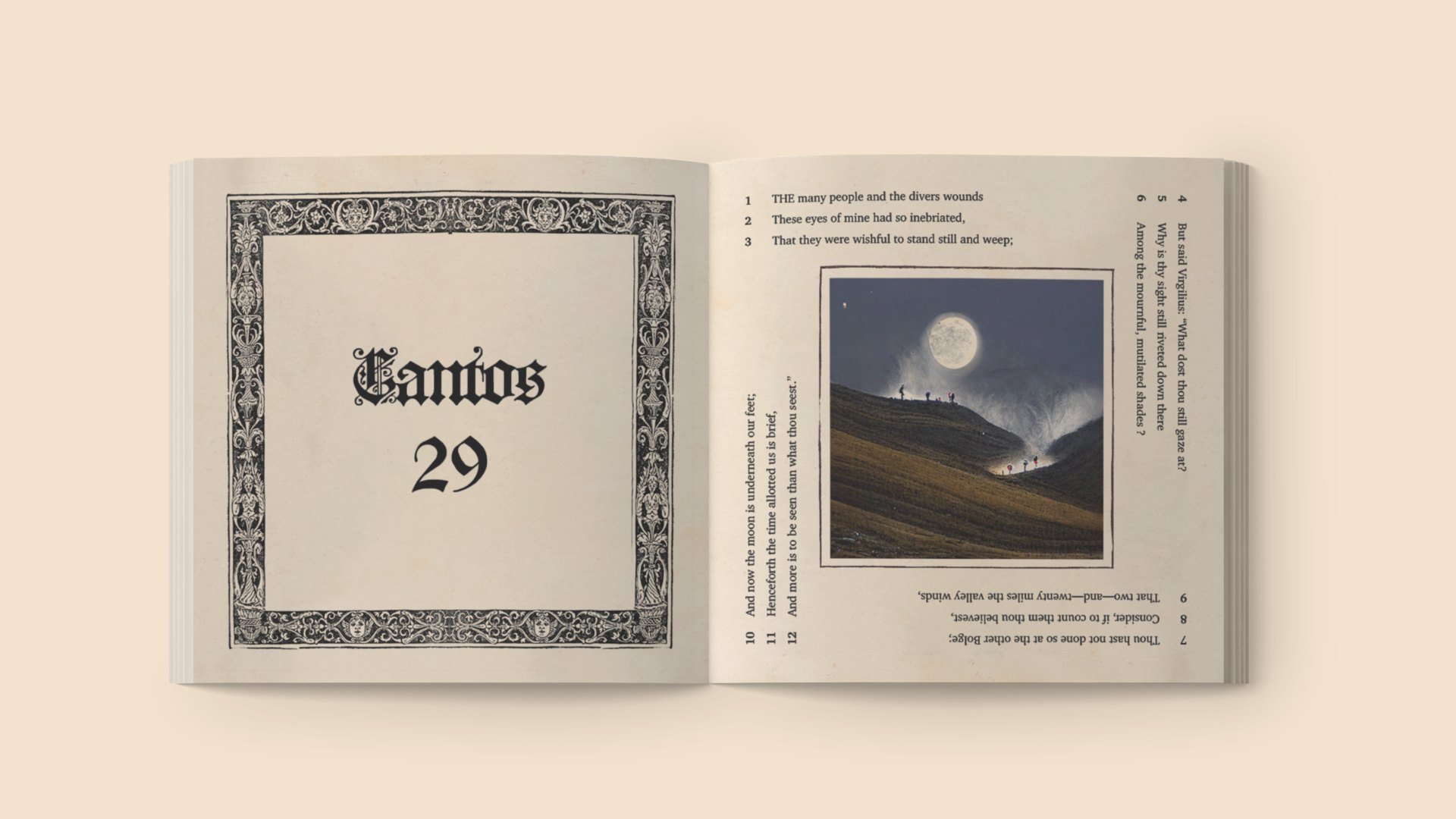
Dante’s verse moves in tercets, three lines at a time, each rhyme reaching into the next. The layout is built on that unit. Every page holds four tercets, one on each side of the picture, and each sits a quarter turn from the one before.
So the book has to be turned to be read. One page is one full rotation, a canto is about a dozen, and the reader circles down through the text much the way Dante circles down through Hell. Every line keeps its number from the canto, set in bold beside it, so the place is never lost.
- The first tercet runs upright along the top.
- A quarter turn: the second runs down the right side.
- Another quarter: the third runs upside down along the foot.
- The fourth climbs the left side and closes the circle.
- The picture holds the center, made from the twelve lines around it.
The pictures
The verse is the prompt.
Every page has one picture, and each picture comes from the lines around it. In most cases the prompt was the verse itself, word for word, with only a hint of style added. Where the old English was too tangled, the line was retold in plainer words. Each page went through several rounds before one picture was kept and enlarged for print.
The aim was to see what an image model makes of Dante when it is given nothing but Dante. Some pictures follow the words closely. Others drift, and the drift often suits Hell better than a faithful illustration would.
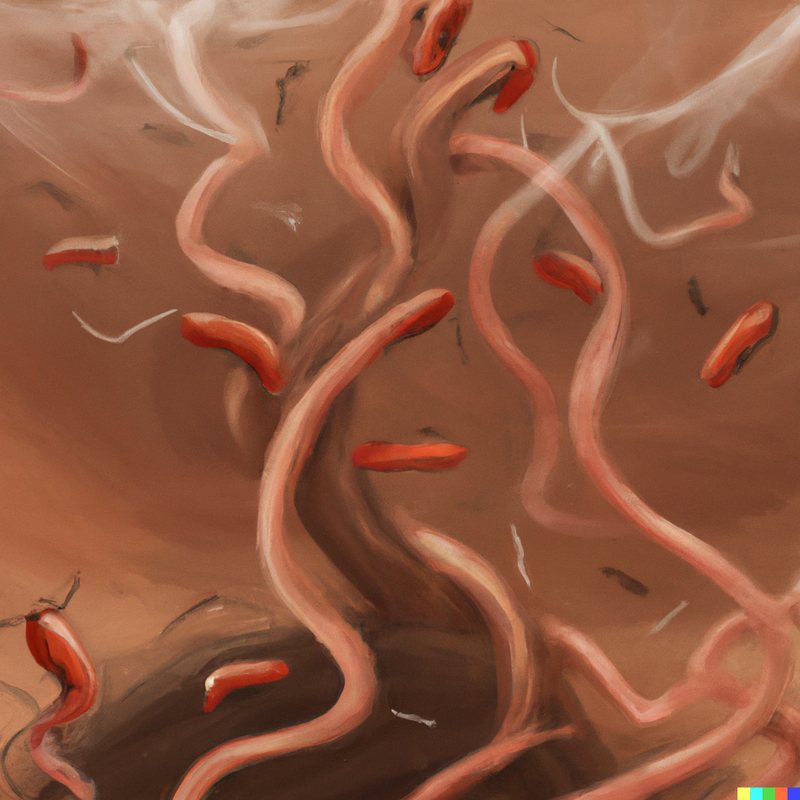
The animals, down to the little worm,
All fell,
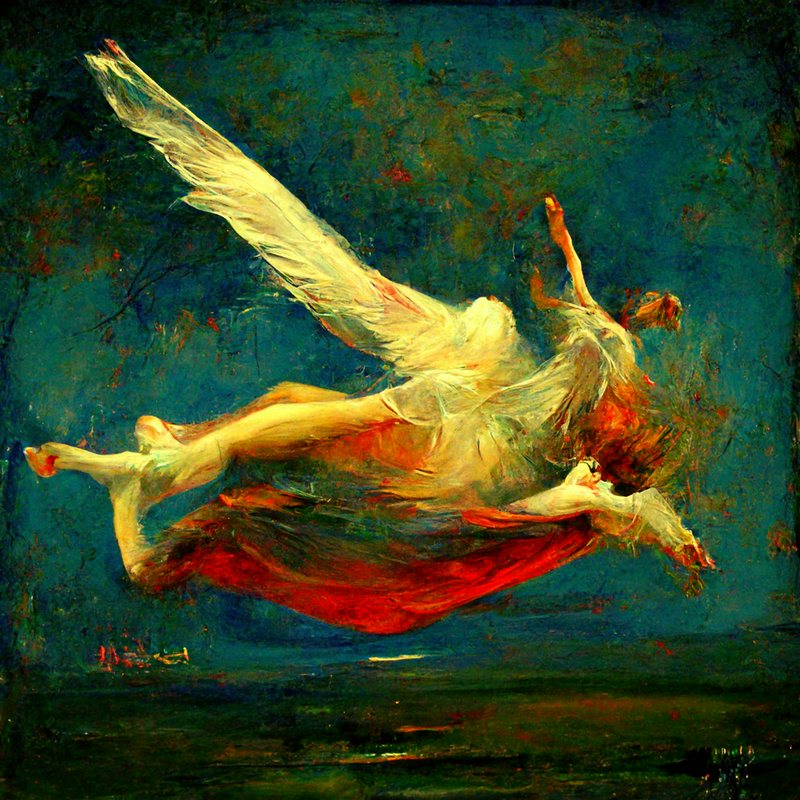
That I could rise by flight into the air,
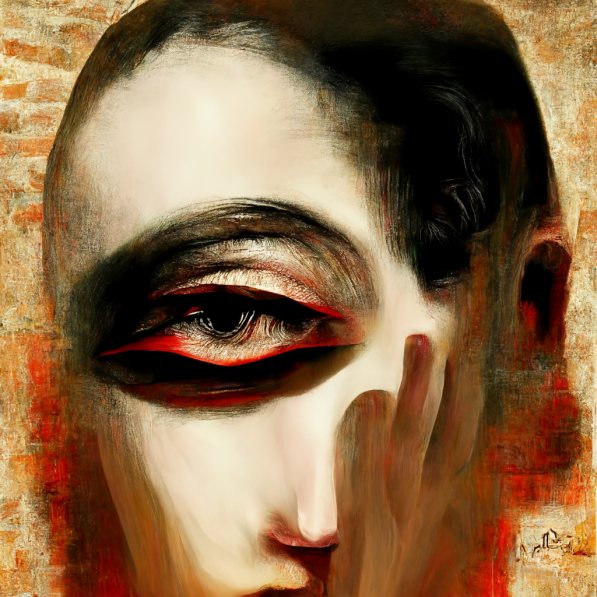
make sharp thine eye
Tow’rds me, so that my face well answer thee,
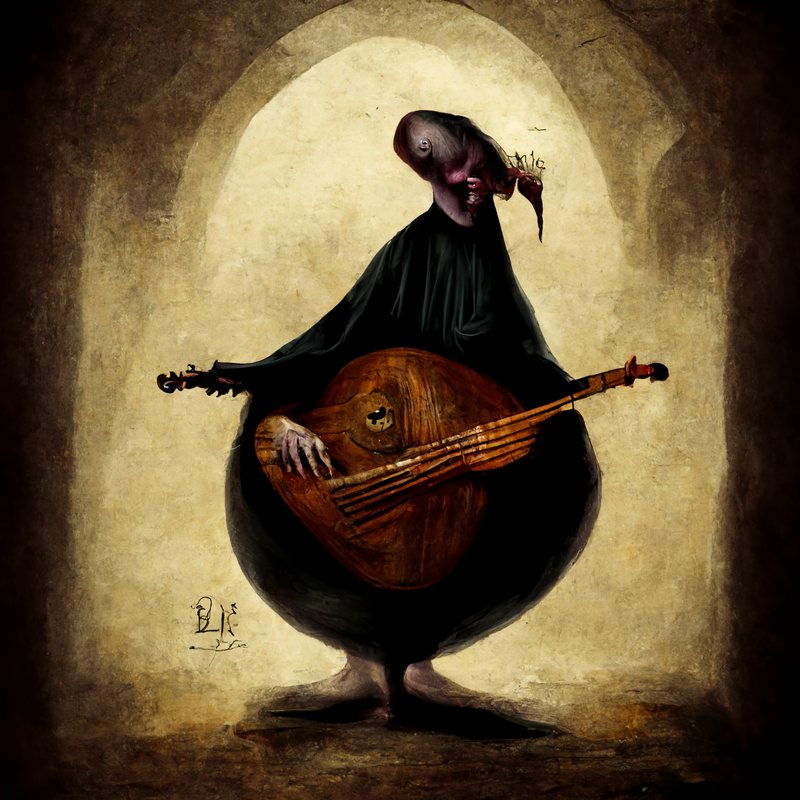
I saw one made in fashion of a lute,
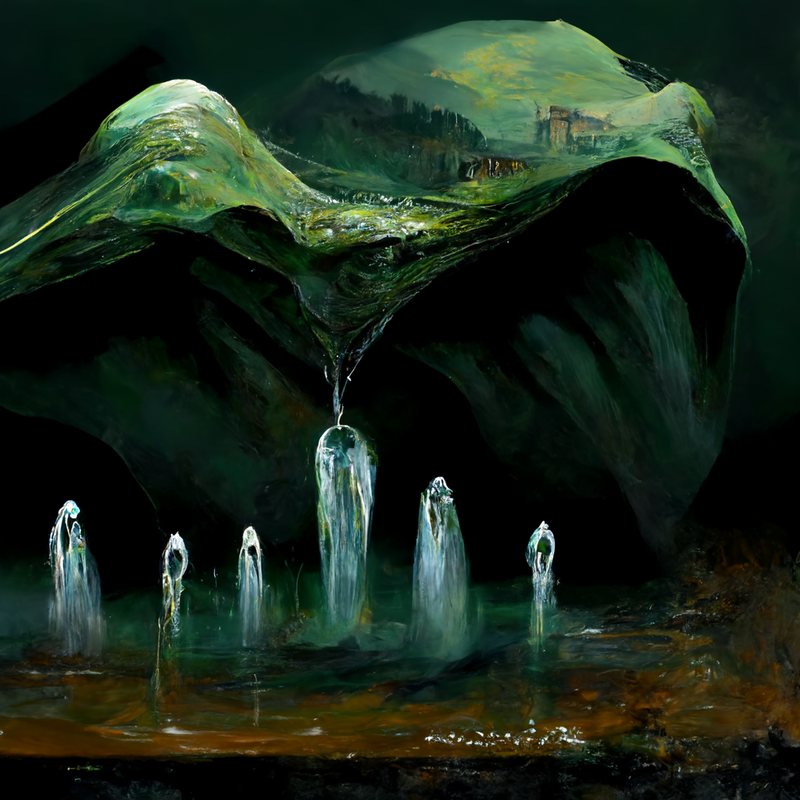
The rivulets, that from the verdant hills
Of Cassentin descend down into Arno,
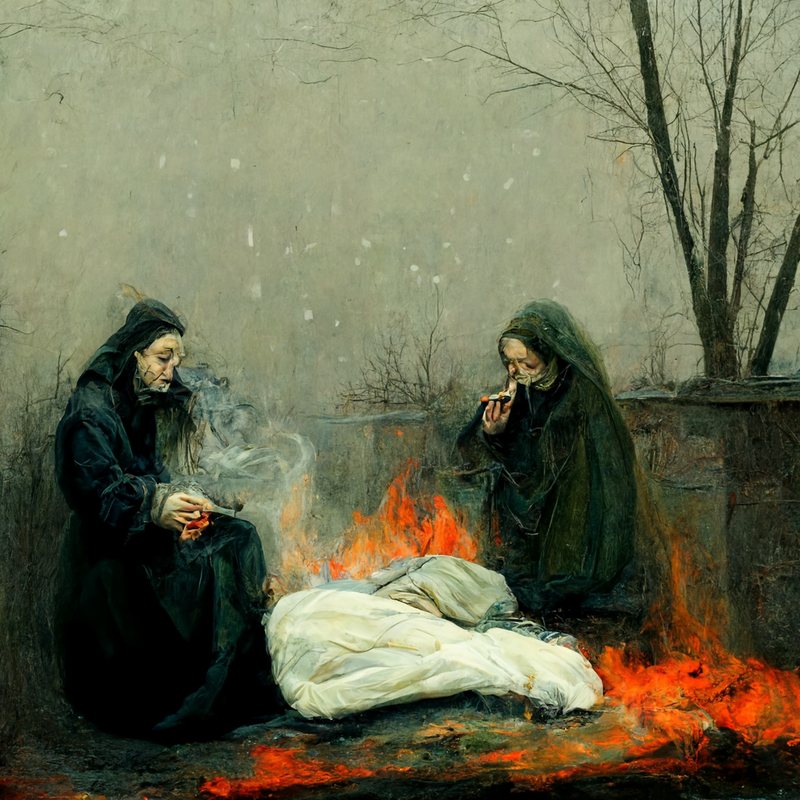
the two poor wretches
That smoke like unto a wet hand in winter,
Six of the 37 pictures, each beside the lines it was made from
The book
Old paper, new pictures.
The look comes from early printed editions of the Comedy: warm, aged paper, a thin ruled frame around each picture, and a woodcut border that opens each canto. The pictures are new; the book around them feels old.

Titles are set in Dearest, a blackletter in the manner of the first printed books. The verse is in Charter, a sturdy serif drawn for clear reading, with its bold for the line numbers.
Inferno
Cantos 29 • Cantos 30 • Cantos 31
49I saw one made in fashion of a lute,
50If he had only had the groin cut off
51Just at the point at which a man is forked.
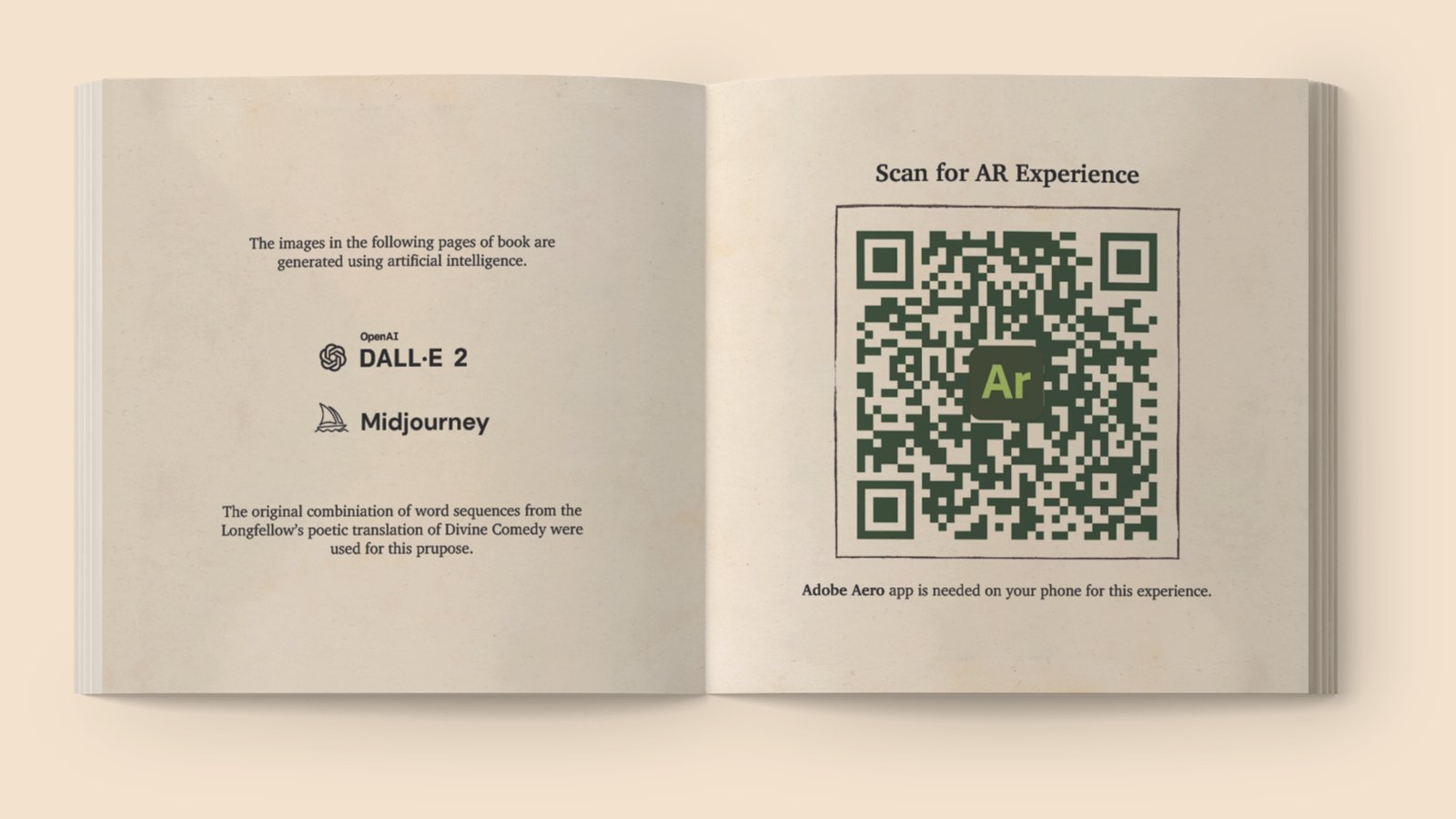
Opening spread · a note on the pictures, and the AR code
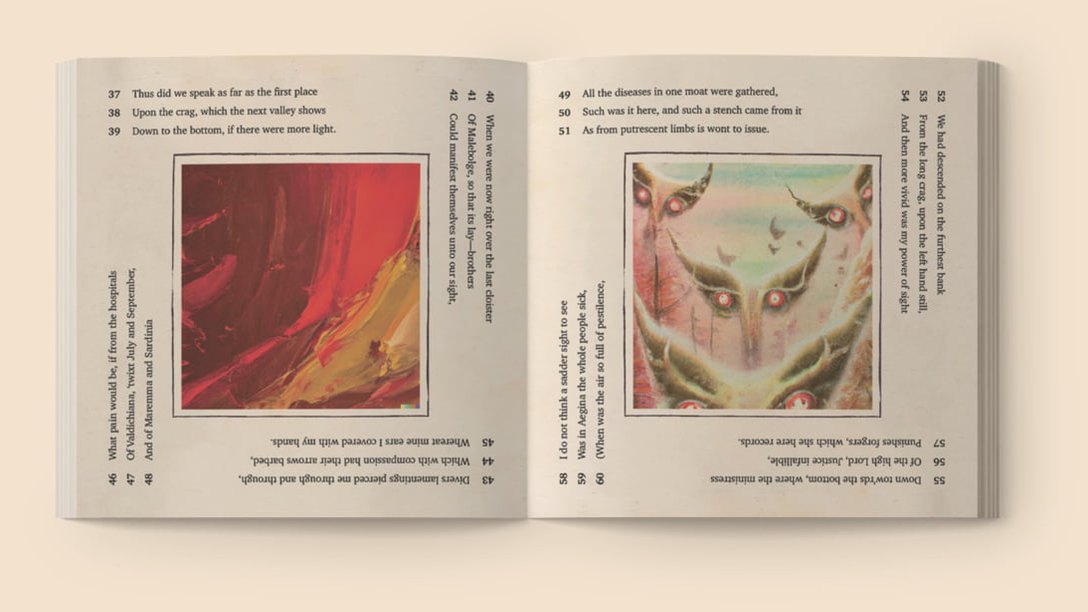
Inferno XXIX · lines 37 to 60
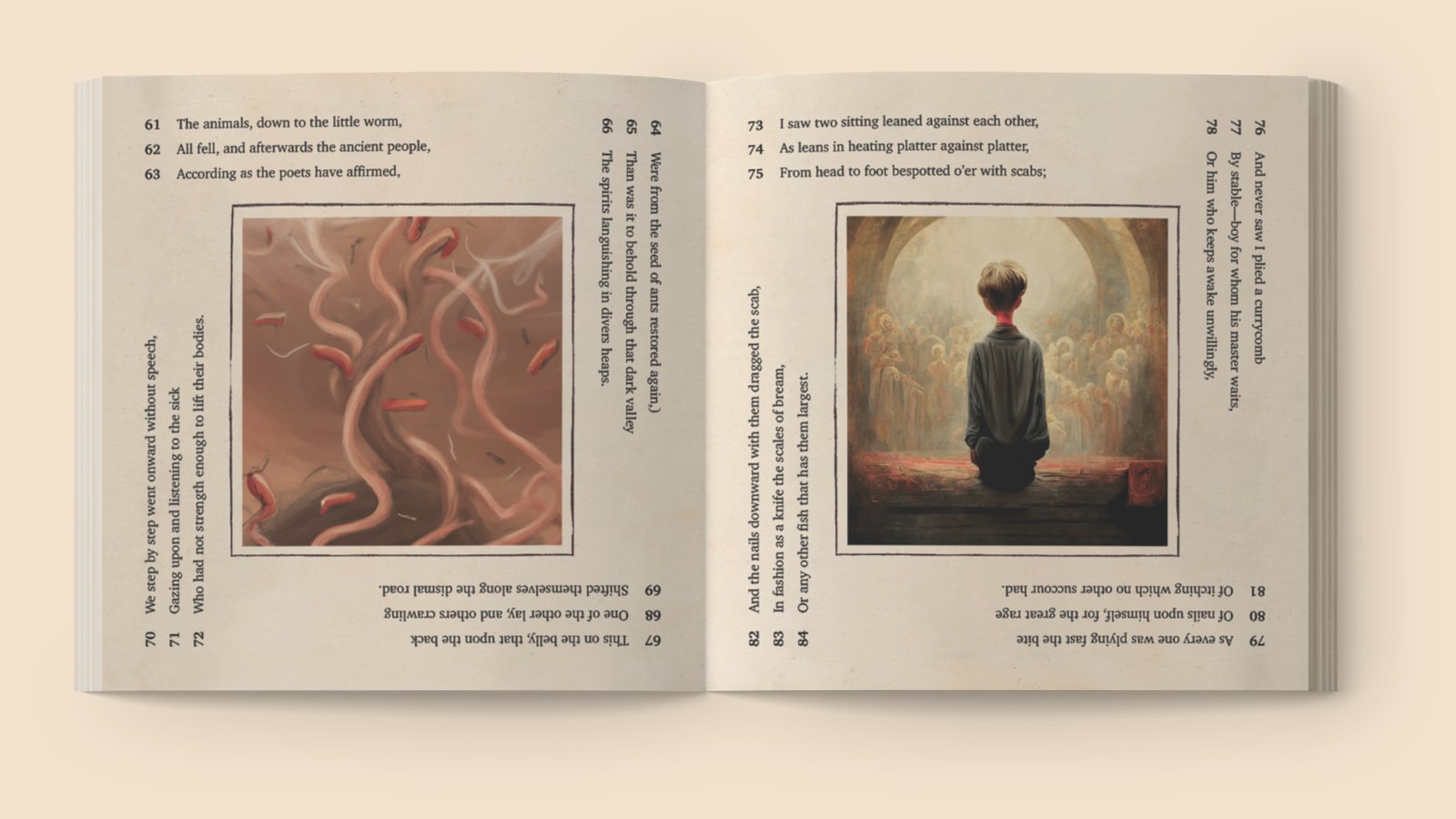
Inferno XXIX · lines 61 to 84
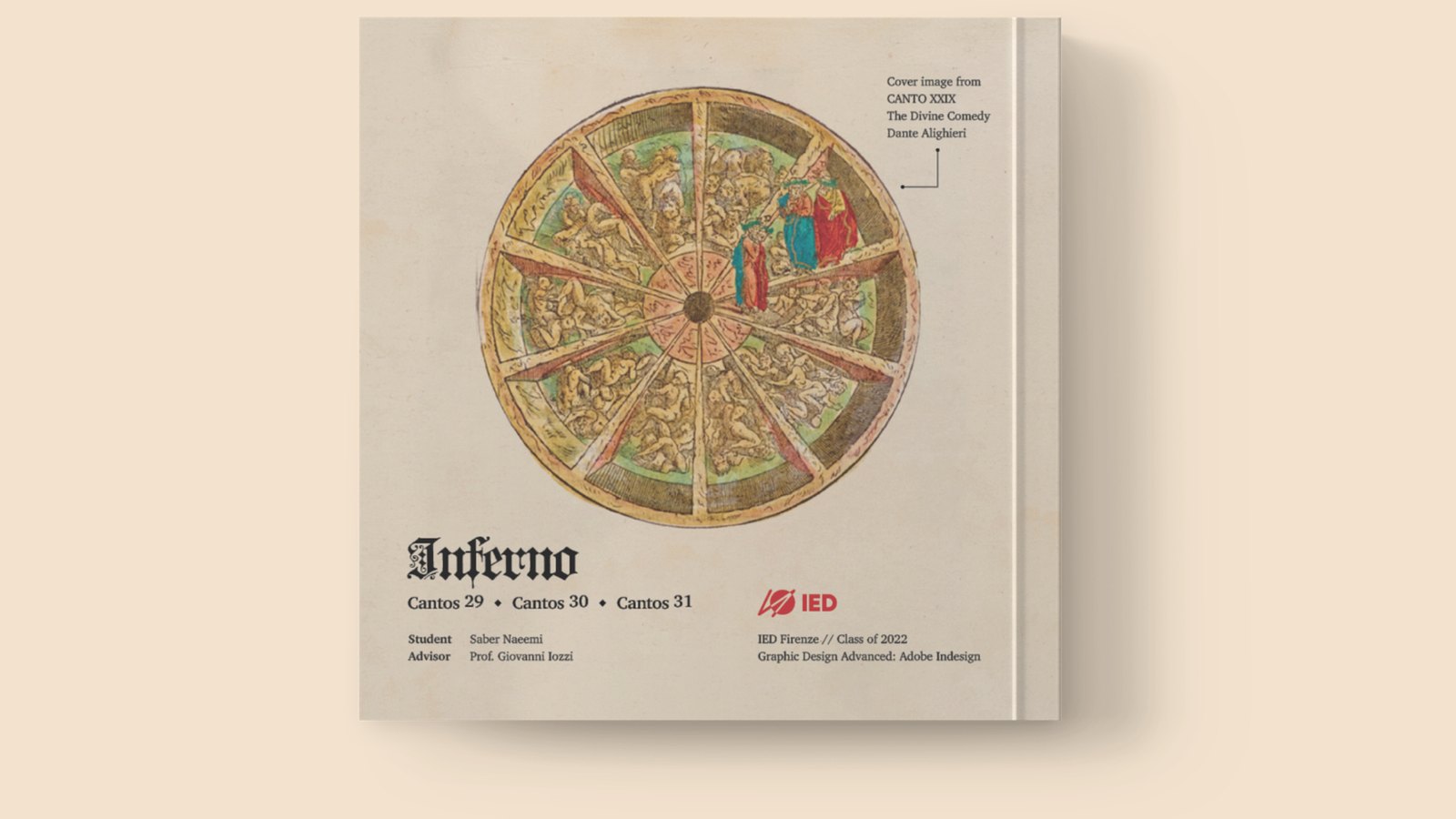
Back cover
And now the moon is underneath our feet.
Inferno XXIX · line 10 · stars after Giotto’s ceiling in Padua
Into the book
The cover is a door.
Alongside the print, the book has an augmented reality version that stands up in the room as a tunnel. The cover is the entrance, and every page is a doorway further in.

First sketch
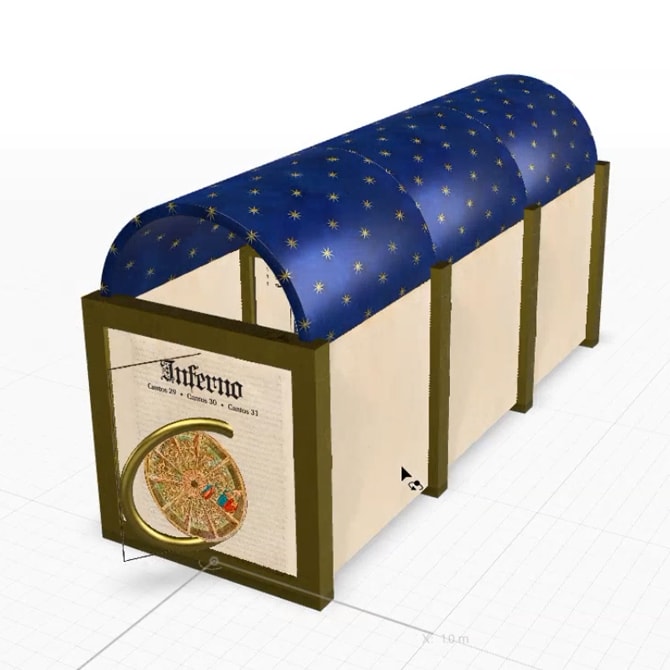
The tunnel, built
Tapping the cover turns its wheel, and the door swings open on the first page of Canto 29. Each tap turns the page a quarter, the same turn the printed book asks for, with the sound of stone sliding on stone. After a full turn the next page unlocks, and the tunnel carries the reader on to it.
Overhead runs a vault of deep blue scattered with gold stars, after the ceiling Giotto painted for the Scrovegni Chapel in Padua. Dante knew the name: in Purgatorio, Giotto is the painter everyone is talking about.
Need a book people remember turning?
Brand identity, editorial design, campaigns and motion. Designer based in Florence, working wherever the brief is.